When whānau or individuals are struggling, we often ask: what is wrong with them? And How do we fix it?
We focus on symptoms, behaviours, resilience and interventions. But what if we shifted our focus and the question toward the system?
What conditions have produced this outcome? What relationships have been weakened? What has the system forgotten?
This is the shift emerging in how we understand Hauora, as something that does not simply exist within an individual, but emerges through relationships.
This is also where I have found myself increasingly interested in Indigenous systems thinking.
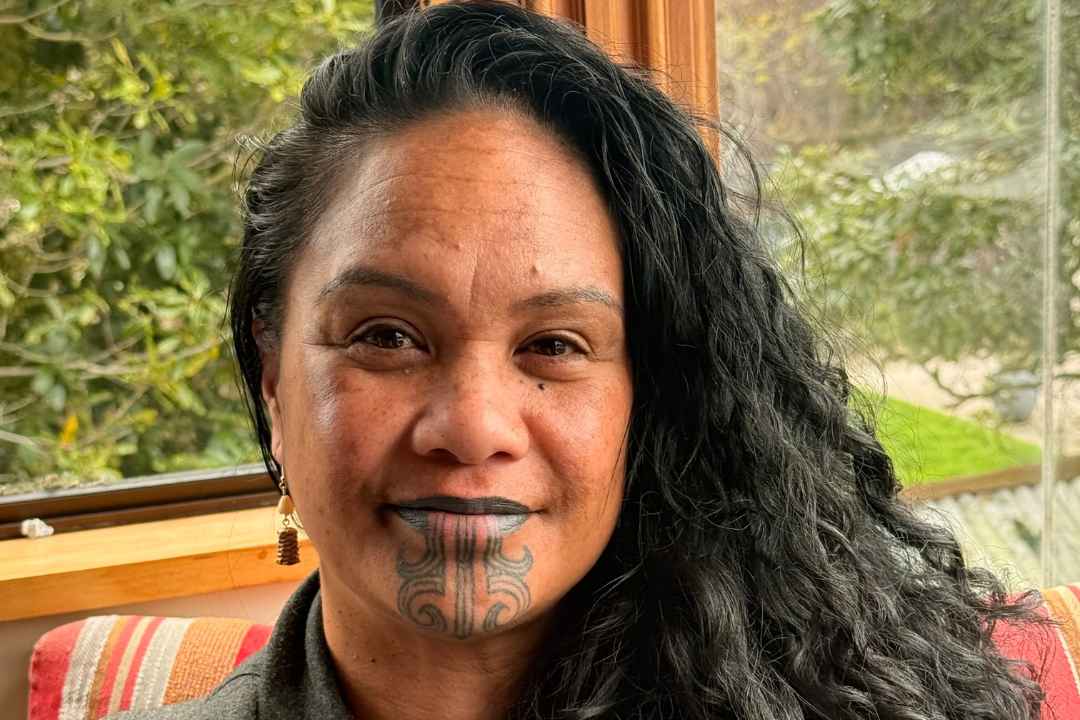
Recently I have had the privilege to wānanga with Jesse Grey Eagle, Author of “Indigenous Systems Thinking: Designing Systems That Remember”
Jesse Grey Eagle posed a question that has stayed with me:
“When does a system stop being a system and become a collection of disconnected parts?”
I believe this is definitely a question we need to wānanga.
Many of the systems surrounding our people have become fragmented.
Health is separated from tāiao.
people are separated from whenua.
mātauranga is separated from practice.
Whānau are separated from decision-making.
feedback is collected, but often does not return.
From a Māori worldview, [I know this sounds like a broken record] we know that nothing exists in isolation. Tāwhirimātea, Tangaroa and Tāne do not operate as separate systems. Their relationships create movement, change and life. A shift in one part creates consequences elsewhere.
Interdependence is not a theory. It is how the living world works. Perhaps our systems need to learn from this.
Jesse Grey Eagle describes Indigenous Systems Thinking as understanding systems that carry memory, relationship, responsibility, time and accountability.
That challenges us to ask:
What does our system remember?
Who does it belong to?
Where does knowledge live?
Where does feedback go?
Who carries responsibility when the system forgets?
A key part of our wānanga that I took from this is… what remains when the programme, funding, contract or person is gone?
These questions sat with me because activity continuing is not necessarily the same as a system working. When memory, relationship and responsibility are not held within the system, the burden eventually falls on individuals.
We see this when the same stories are retold, the same problems reappear, relationships have to be rebuilt again and again, and valuable knowledge leaves when people leave. And this is probably why a majority of our people are still in Survival mode rather than Thriving mode..
What if success was measured not only by what we delivered, but by what became stronger because we were there?
And what if our systems were designed with the same understanding that sits within our thinking about Hauora, that wellbeing is not something we simply deliver to people, but something that emerges through the conditions and relationships around them?
Maybe the opportunity is not simply to make our existing systems more culturally responsive. But to wānanga, what an Indigenous system actually looks, feels and behaves like.
Not another framework to add to the pile. Not another Māori label placed over an existing structure. But an invitation to examine how we think, how we behave and how we design the conditions around our people.
Perhaps the question is no longer whether our systems are working.
Perhaps we need to ask whether they are remembering who we are.
Now that feels like a conversation worth a wānanga.

.webp)