Guided by the kupu whakarite, “Mā koutou tēnei rautaki, mā koutou ēnei kōrero, mā koutou anō e whakarei tēnei mātauranga o Raukawa ki te ao,” Nicola Ratima’s project, Ngā Uara o Kurungaituku: Tākaro, Taiao, me te Manawaroa, sets out to restore and re-centre Raukawa ways of knowing within Tākaro and Health and Physical Education.
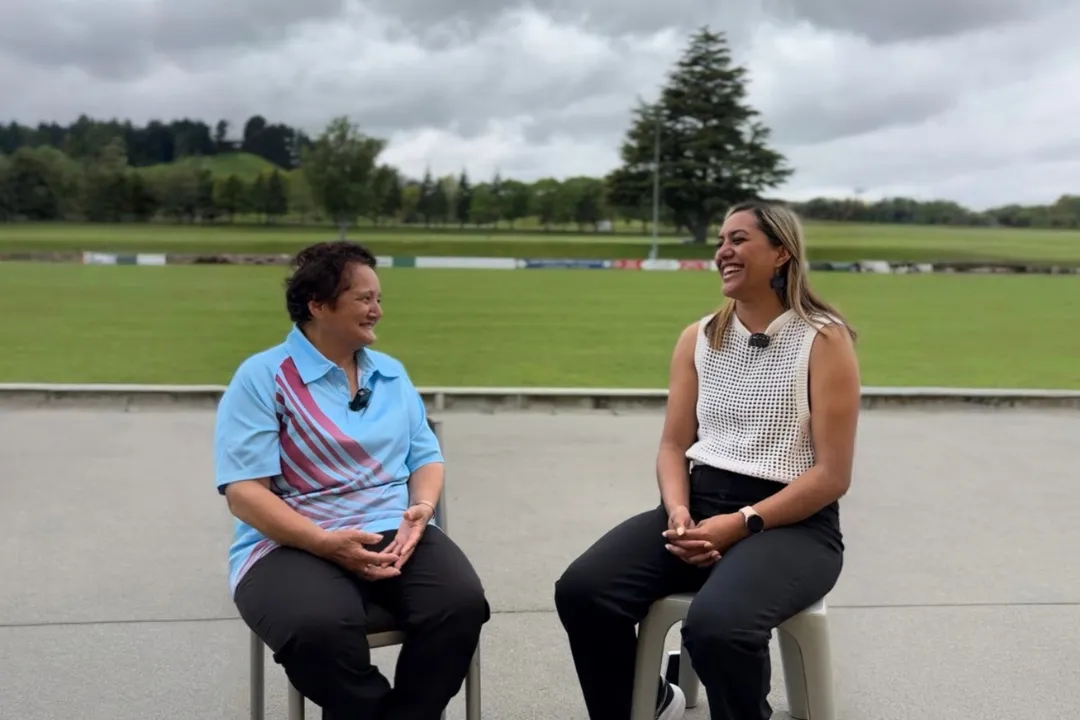
At its heart, this was about voice. Nicola conducted in-depth interviews across generations — kaumātua, pakeke, and rangatahi — gathering rich whakaaro on Tākaro as cultural expression, connection to taiao, identity, resilience, and adaptation. Rather than speaking for her people, she created space for them to speak for themselves. The kaupapa was grounded in lived experience layered with memory, environment, and whakapapa.
Central to her analysis was the pūrākau of Kurungaituku. Through this narrative lens, Nicola explored manawaroa, adaptation, wāhine positioning, and the inseparability of people and place. Kurungaituku became an analytical and cultural anchor. Through her, Nicola reframes Tākaro not simply as physical activity, but as relational, environmental, and identity-forming practice.
To share this mātauranga widely, Nicola created Ngā Uara o Kurungaituku, a digital platform as her key output. A thoughtfully designed website featuring interview insights, her own critical reflections, and original infographics. Drawing on the Atua Matua framework, she visually articulated how Atua relationships inform movement, how Tākaro is grounded in whenua, and how resilience is shaped through ancestral systems. Her design work made complex whakaaro accessible without losing depth.
What stands out in Nicola’s mahi is its intentionality. It was iwi-specific and deeply personal. She invested her time, her creativity, and her own identity into this kaupapa.
Through Ngā Uara o Kurungaituku, Nicola has contributed a resource that restores Raukawa narratives within movement spaces and gently but firmly challenges mainstream HPE frameworks to expand, to make space for Indigenous epistemologies, for pūrākau, and for whenua-based understandings of wellbeing.
Her work reminds us that Tākaro carries story. And when those stories are reclaimed and shared, they strengthen us all.

