A few months ago we heard from Hana as she spoke to the ways that Intergenerational Intimacies has transformed her relationship with kai. Now Hana speaks to Haylee to do the same. Haylee reflects on the waxing and waning nature of our relationships with kai, reminding us that there is a time for tending, and a time to be tended to. We hear about the power of eating seasonally, including the ways in which it brings us back into a sense of taiao driven time. Winter vegetables from the local farmers market, or otherwise are reminding us to stay connected to the whakapapa and whanaungatanga that makes our kai possible.
I really enjoyed reflecting on Intergenerational intimacies with you earlier this year, and I know that you’ve also had reflections since we wrote the paper. So I thought I would begin by asking the same question you asked me: Reflecting on the paper in your personal life, how has your relationship with kai changed or transformed?
I've become more cognisant of the expansive ways we can relate to kai. Sometimes they are layered and complex, and sometimes it is striped down to its bare bones. Whatever the case, our relationships with kai are always there. Like for the last few years my relationship with kai has involved teaching about kai, growing kai, sharing kai, buying kai from the local market, preserving kai, juggling supermarket kai budgets, listening to kai podcasts, reducing kai waste, and of course, feeding myself.
Last summer though, I decided to put the garden to rest after two consecutive years of tending, so that I could tend to myself. I was recovering from burnout. During this time I wasn’t growing kai, or cooking kai or even shopping in person. I had the privilege to pay for pre-made delivered meals and for a while my relationship with kai was strictly one of being nourished. It took me far longer than it should have to recognise such an accommodation was needed and available. I learnt an important lesson from my disabled relations, that I could continue to strive and suffer under old expectations and capacities, or I could adapt and thrive - by meeting myself in this new place. I felt such a sense of relief and gratitude to simply be fed over that time. It affirmed for me that our relationships with kai wax and wane overtime, as should be expected. Nothing in taiao remains unchanged and neither do we. In the last few months I’ve returned to cooking with a renewed energy. I recently returned to cooking out of curiosity more than anything, and it feels really good!
What you’ve shared shows the many layers that encompass our relationship with kai. What is a particular layer of kai that you’re zoomed into right now?
Given that it's winter I've been in the kitchen a lot working with winter ingredients. I’ve also been watching Masterchef Australia, which has been so cool. As a teenager I wasn't watching MTV, I was often watching the food network channel, or ready steady cook. Returning to my teenage passions has really reinvigorated my love for cooking. At the moment I'm experimenting with a lot of beans, lentils, grains, basically high fibre foods after being (easily) influenced by my friend Tarapuhi. As someone who almost never cooks the same thing twice, I'm experimenting with repeating specific dishes, trying to master specific recipes. For me it's about wanting to really zoom into the harmony of ingredients, and how they work together. Being more present with your intention and your action. Tasting as you go, seasoning things well. Changing tact when needed. All just good general life lessons that come in handy when you’re making kai.
You’ve talked about your relationship with kai changing through the seasons, does your cooking change much through the season?
Having gardened for as long as I have, and living in whangarei with access to the farmers market for the last few years, my awareness of the seasonality of kai has really come to the forefront. I look to seasonal produce and I'm like, ok, this is what's growing, this is what's bringing people to the whenua, this is what's happiest right now in this weather. There is something powerful to me about returning to seasonal produce, because despite the modern global food system which tells us that we can have anything we want, whenever we want, buying seasonally really affirms for me the mana of our taiao, and what it makes possible.
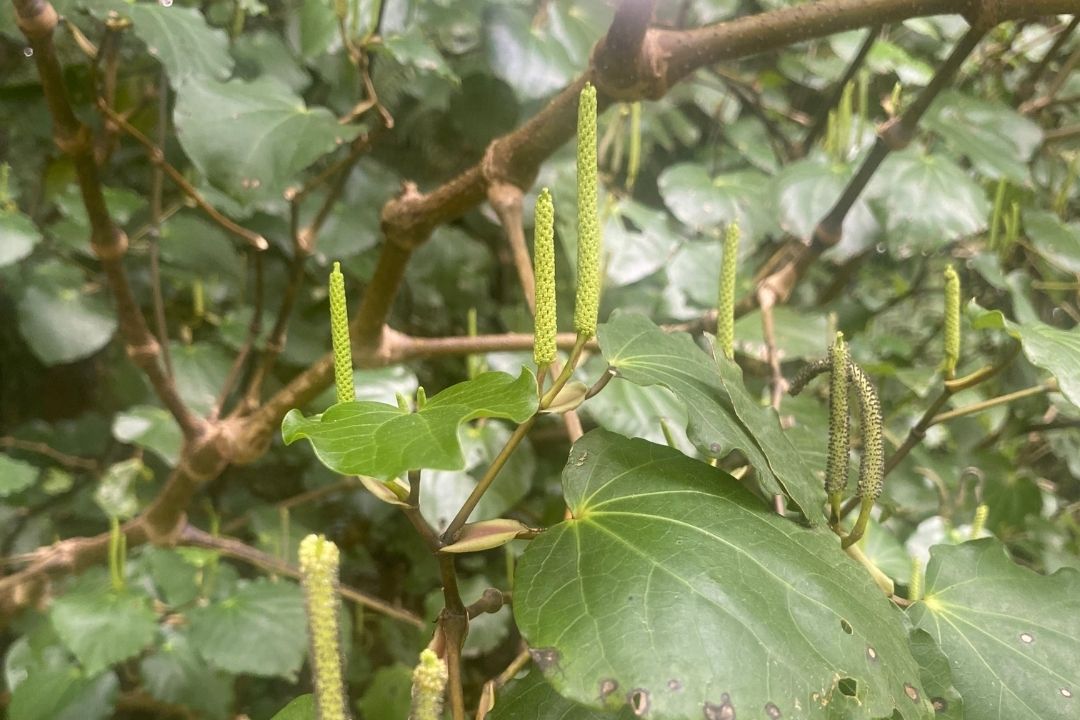
I've also really begun to orient my sense of time to what I know will be available. For example, after asparagus season (we’ll be having our third harvest this year) there are strawberries, then peaches and plums, in that order. Then there are watermelons. And because as a kid we used to holiday in Omaha, two driveways down from a blueberry farm I know that we get blueberries and then feijoas a little later. And somewhere in the mix perperu will be available (from my mate in kaikohe specifically) and and then tomatoes, of course, tomatoes… (you get the gist). I love the anticipation of waiting for produce that can only be bought for so many months a year at its absolute best. I love to feel like I know exactly where I am, exactly where im positioned in relation to what's in season.
Whats been the highlight of this season for you?
Leeks, i loooove leeks. You can substitute them almost anywhere that you use an onion. Pies with leeks in it, leeks in soups, paired with lentils or chicken.
In winter, the variety of produce is quite limited but its been really exciting to look to different cultural contexts, finding different ways that different communities and cultures prepare these different foods. Thats been really fun to do. To think about how cabbage might be eaten across Europe like with stuffed cabbage rolls, or Japan where it's thinly shredded into a slaw, or in chinese cuisines where it's simply stirfried, or korea where its turned into kimchi. It really helps you to deepen your relationship and experience with specific foods. You have less range, but you get to diversify in the ways you cook with, and prepare it.
As we speak I'm thinking about how much you love kai, I really appreciate the reverence you have for kai. Sometimes I still think that in conversations we are having about kai, kai is still often seen as an object, or something to be mastered, or maximising production, or optimising nutrition. So, how has your reverence or love for kai continued to inform what you do, is that important?
One context in which I really feel that reverence for kai at the moment is going to the farmers market, and seeing all the seasonal produce. Being so excited by it, seeing what's available, getting to meet and interact with the people who have grown this kai, who are also part of this community. It's like we’re all communing in this time together around this kai, at 6am in the morning, in winter, mind you. To meet, and to participate in the celebration and exchange of kai, and to acknowledge the work that has gone into the growing (and as a long-time gardener I have a particular sense of understanding just how much work goes into it). At the market, whanaungatanga feels really visible, at the forefront of exchange, in a way that's missing in our broader interactions with food.
And just to be clear, I still shop at the supermarket, so it's not that im turning my nose up at that. But it is quite difficult in a supermarket context to connect to the whakapapa of the kai you are buying, even though that whakapapa does exist. And reflecting on our online wananga that we’ve just finished, these kai don’t just have whakapapa, as in, “this was grown in the Hawkes bay over the last 6 months”. They have whakapapa, as in, in order for that kai to exist here and now, some version of that kai, some version of its tupuna has to have existed and persisted across hundreds of generations. Cultivated by people and place. It's difficult not to have reverence for kai, when you consider that kind of scale, that scale of action and interaction to bring you the kai you are eating, it's an unfathomable scale frankly.
If we can take the time to remember or acknowledge even one thread in the complex web of whanungatanga that constitutes our kai, we are reminded that kai is whanaunga, (as we are told through our creation stories) not object, or commodity or macronutrient.

