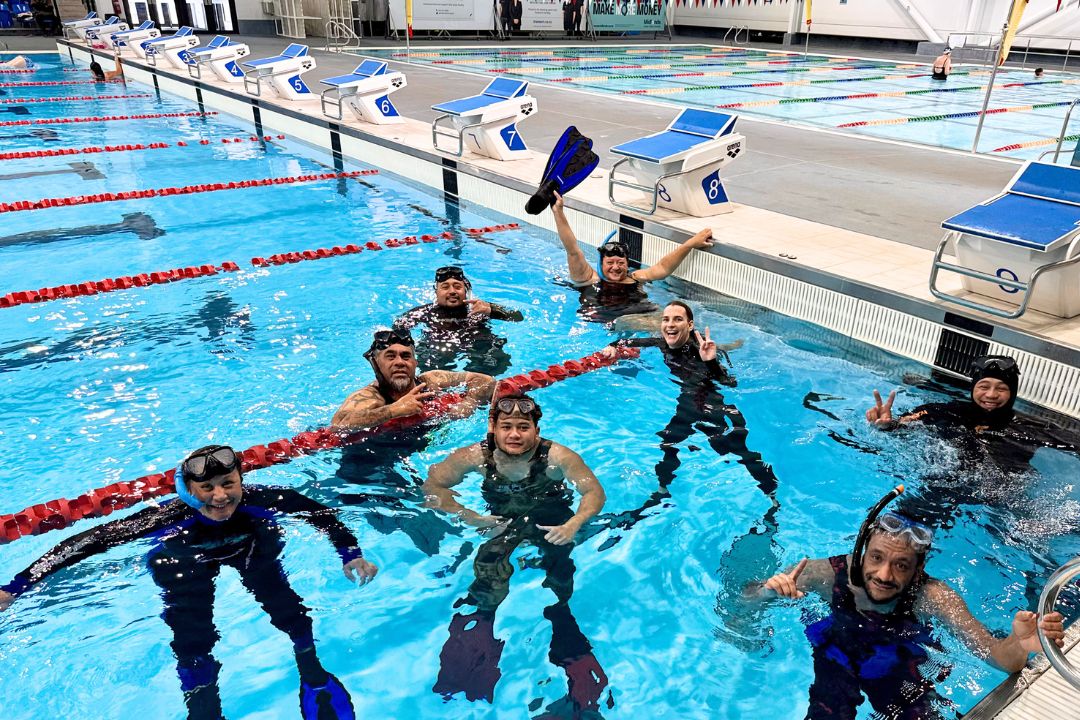
From strengthening our connection to wai to building lifesaving skills and confidence in the moana, whānau across Kahungunu are embracing freediving and water safety through this powerful kaupapa with Whai Hauora supported by Water Safety New Zealand.
Our connection to wai is woven through whakapapa, identity, kai gathering, recreation, and wellbeing. It runs deep, it is part of who we are. Yet despite this innate relationship with the water, Māori continue to be overrepresented in drowning statistics across Aotearoa. Behind every statistic is a whānau, a whakapapa line, a community carrying loss. These are not just numbers, they are our people.
Research shows that while Māori make up around 15–20% of the population, we account for approximately 20–24% of drowning fatalities nationally. Water Safety New Zealand has highlighted that tāne Māori in particular remain among those most at risk, with many fatalities occurring during kaimoana gathering, fishing, diving, and other water-based activities, the very things that connect us to who we are. This is why initiatives that build water confidence, safety knowledge, and practical skills matter so much.
Through funding from Water Safety New Zealand's Kia Manu, Kia Ora fund, Toi Tangata has been collaborating with Whai Hauora and freediving instructor Kristina Arnold to deliver a series of free freediving and water safety workshops within Kahungunu. The kaupapa is simple: equip whānau with the knowledge, skills, and confidence to enjoy wai safely, while strengthening our connections to the moana.
Since March 2026, whānau from across Kahungunu have taken part in three workshops:
Our final workshop will be held on 21 June 2026 at the Hawke's Bay Regional Aquatic Centre.
Kristina Arnold is a qualified PADI Freediving Instructor who leads the kaupapa with genuine aroha for diving and a deep belief in the positive impact it can have on mental wellbeing. Each session begins with important safety kōrero, covering dive planning, equipment, risk awareness, and good decision-making in the water. From there, Kristina introduces participants to breath-hold techniques, exploring the three breathing chambers of the body: the stomach, the lungs, and the chest. Many participants are surprised by what they discover. Yes, these techniques can extend breath-hold times, but just as importantly, they bring a greater sense of calmness, relaxation, and control. In freediving, staying calm and composed isn't just helpful, it's essential. And as more than a few whānau have reflected, that's a lesson that carries well beyond the pool.
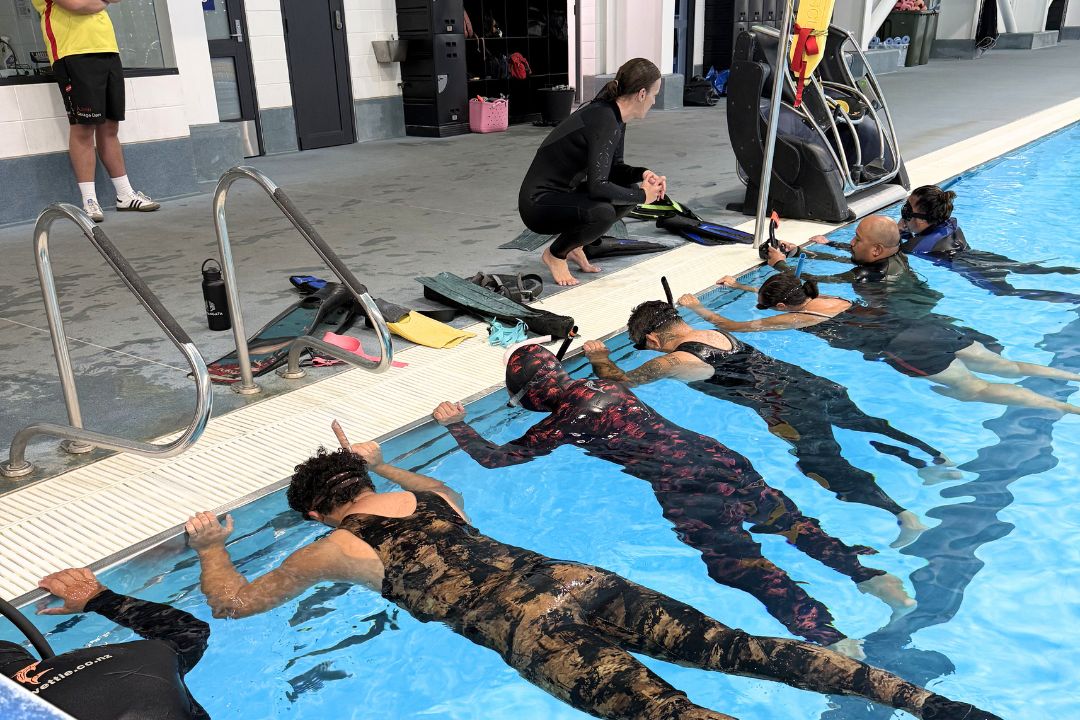
Whānau also learn about buddy diving and rescue techniques. These concepts may sound straightforward, but they are among the most important lessons of the day. Knowing someone has your back, understanding how to respond in an emergency, and being clear on your responsibilities in the water, these things can save the lives of our loved ones.
The practical pool sessions give whānau the chance to put all of it into action: equalising, duck dives, underwater movement, and body positioning. The more at ease you become in the water, the safer and more capable you become. Kristina holds a beautiful space for this, one where questions are welcomed, mistakes are part of the process, and growth happens naturally.
A highlight of this programme has been watching whānau challenge themselves, back one another, and leave with new skills to add to their kete, regardless of their starting point or experience level. That wairua in the room has been something special.
He mihi nui ki a koutou katoa who have shown up and embraced this kaupapa with open hearts. A huge mihi also to Kristina Arnold for sharing her expertise so generously, and to Rāwiri Broughton, who provided wonderful tautoko across the first two workshops.

